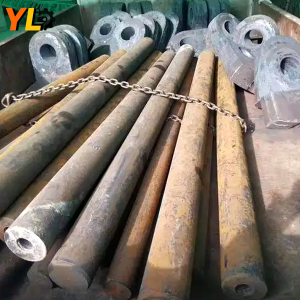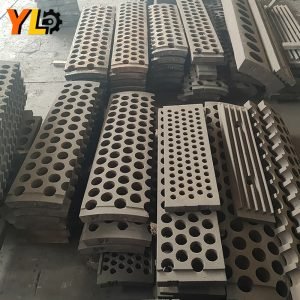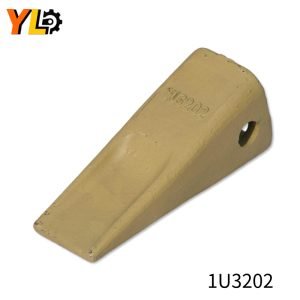
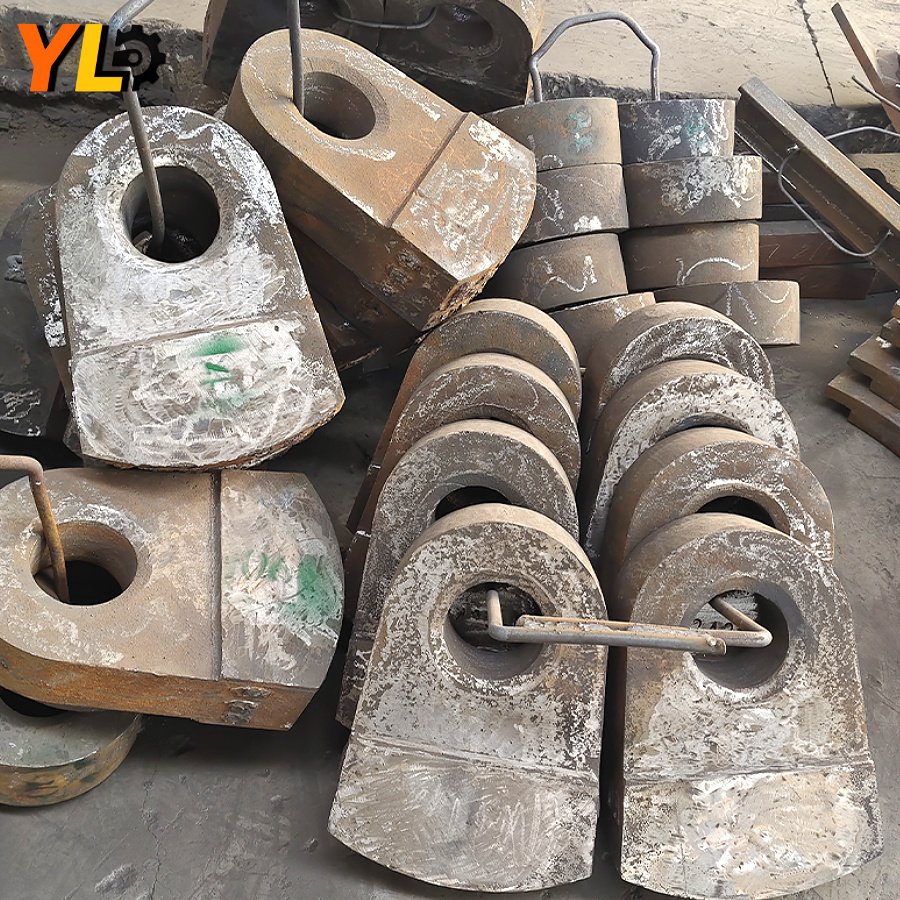
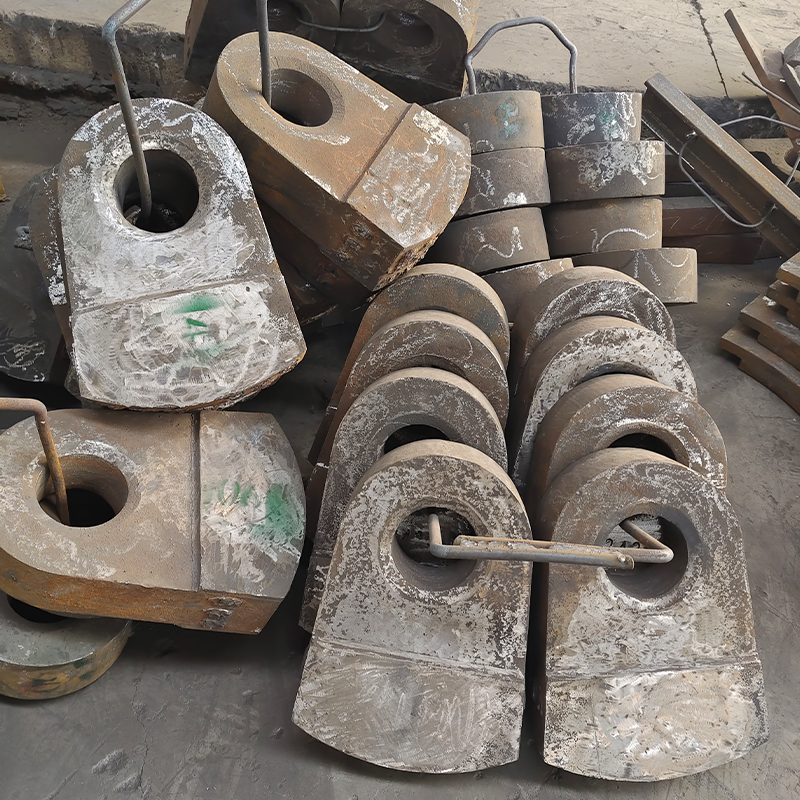
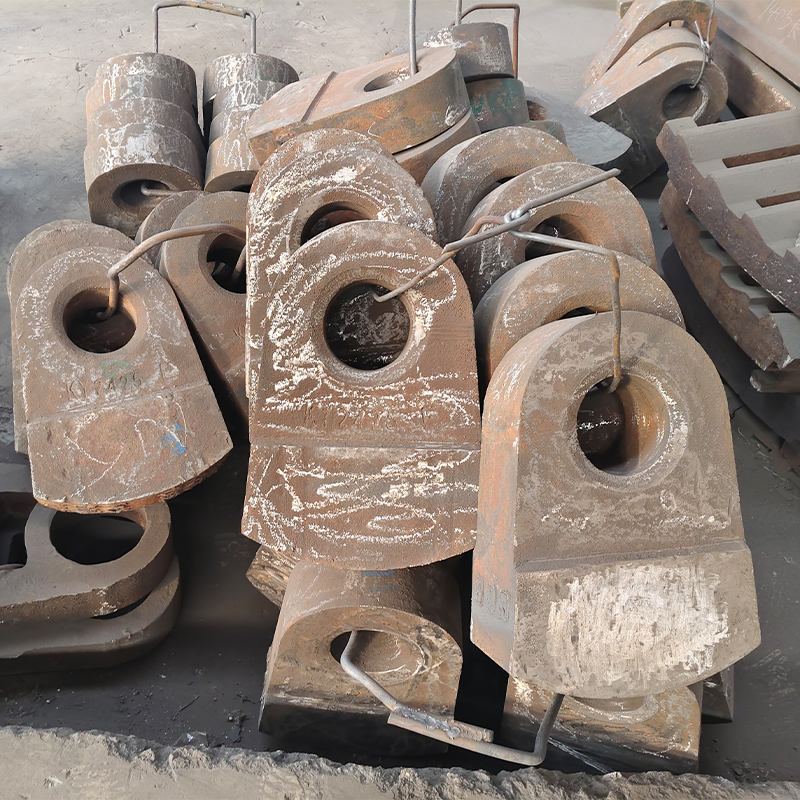
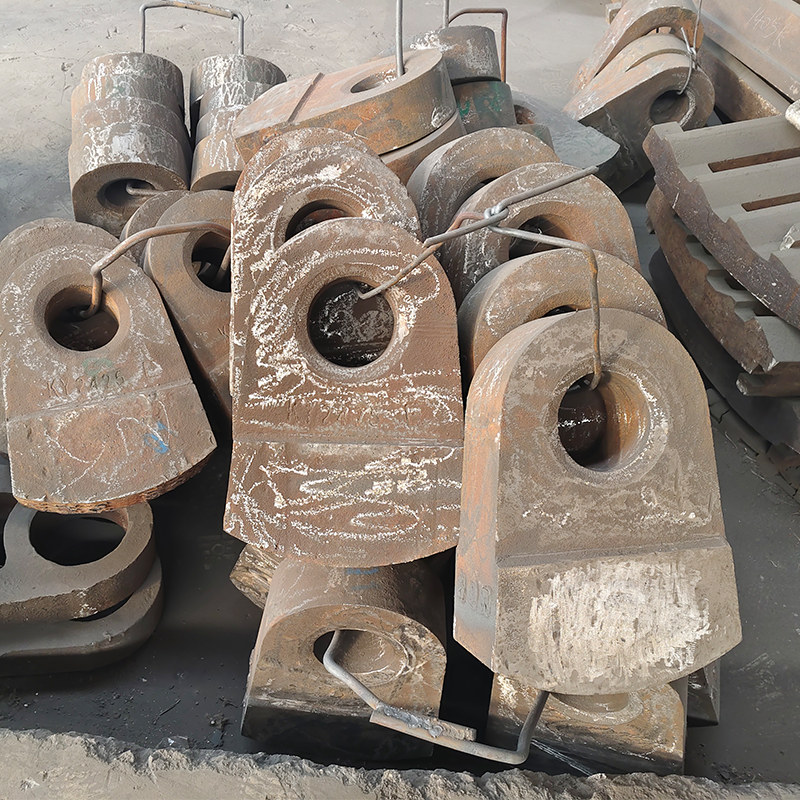
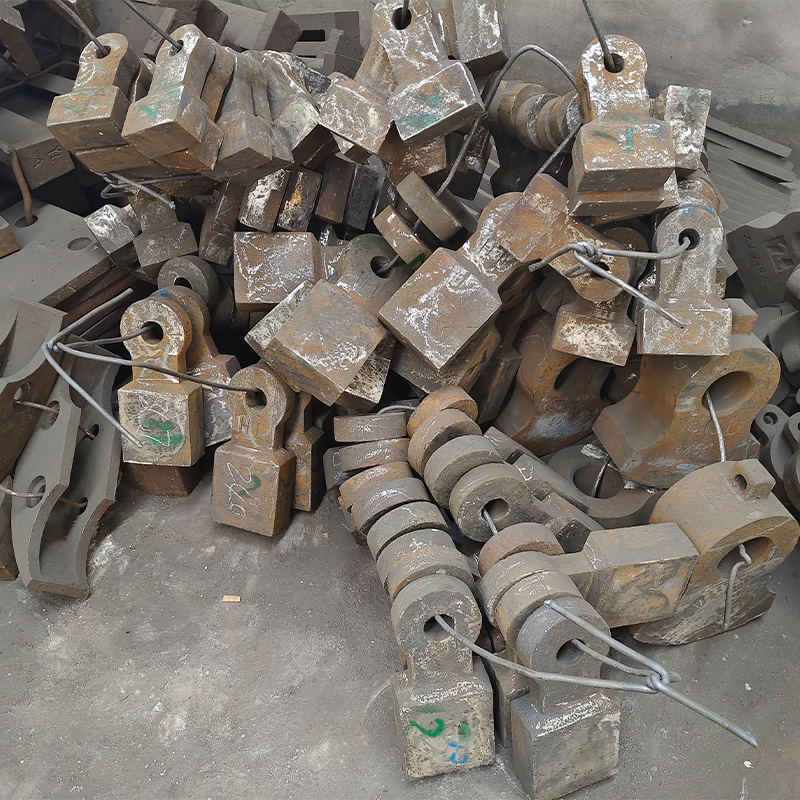
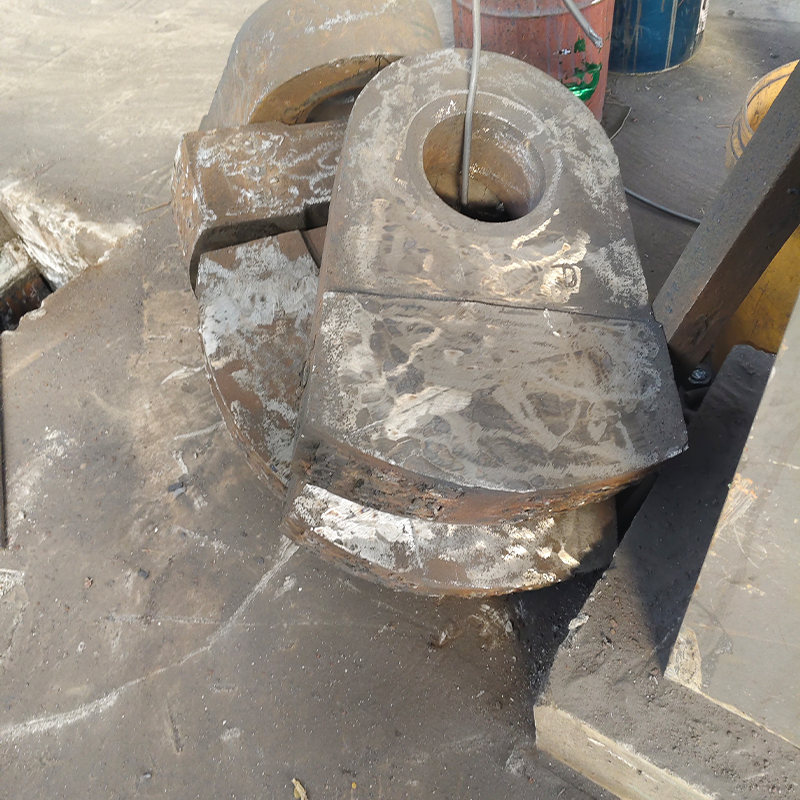
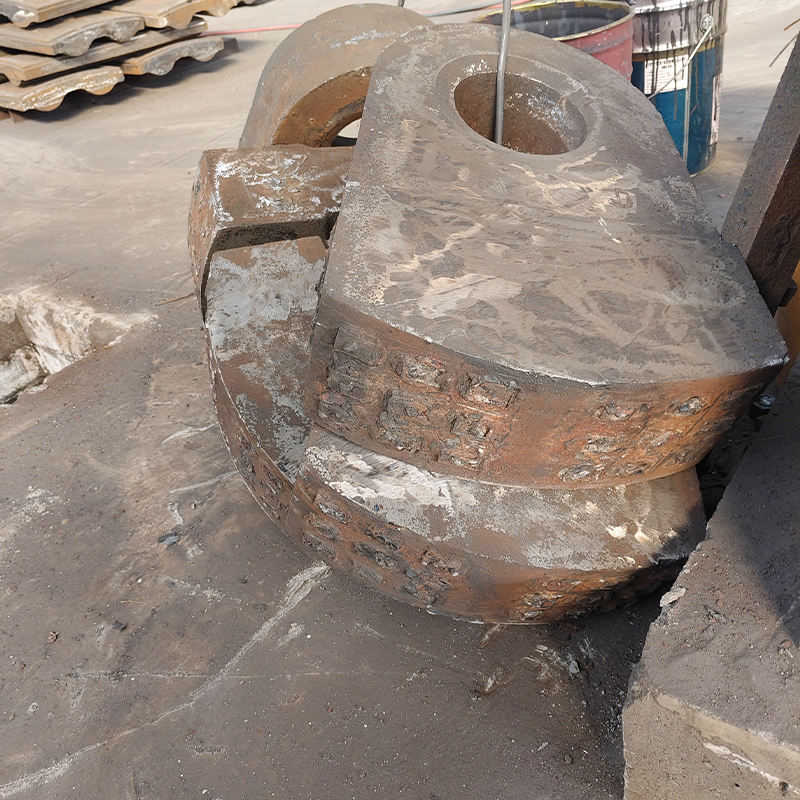
Wear-Resistant Manganese Steel Crusher Hammer Head
Materials: High manganese steel
Application: Sand and gravel yards, cement plants, various mines
Our Ore Mining Hammer Crusher High Chromium Alloy Hammer Head is meticulously engineered to meet the rigorous demands of ore crushing, delivering exceptional performance, long service life, and reliable results in even the harshest mining environments.
Get a quote
Wear-Resistant Manganese Steel Crusher Hammer Head
|
Main materials
|
High manganese steel (Mn13,Mn18Cr2,Mn18,Mn13Cr2)
|
|
Applicable materials
|
Gangyan, basalt, limestone, river pebbles, cement clinker, quartz, iron ore, construction waste, coal gangue, etc
|
|
Application scope
|
Sand and gravel yards, cement plants, various mines
|


Material Properties
-
- High Toughness: Manganese steel has good toughness, which enables the hammer head to withstand large impact loads without easily breaking during operation. Even when subjected to strong impacts, it can maintain good integrity, thus ensuring the normal operation of the crusher.
- Work-Hardening Property: Under the action of large impact or contact stress, the surface layer of the manganese steel hammer head will quickly undergo work hardening, and its work-hardening index is 5-7 times higher than that of other materials. As the surface layer wears, a new surface layer will continuously appear and continue to work-harden, giving the hammer head high surface wear resistance.
Working Principle:
Manganese steel crusher hammer heads are arranged on the hammer shafts of the crusher rotor. When the crusher operates at high speed, the hammer heads rotate with the rotor and directly strike the materials entering the crushing chamber at an extremely high linear speed, causing the materials to be crushed by the impact force. During this process, the hammer heads not only have to bear the reaction force of the materials but also the centrifugal force generated by their own rotation, so they need to have good strength and toughness.
Manufacturing Processes
-
- Casting: It is one of the common methods for manufacturing manganese steel crusher hammer heads. The molten manganese steel is poured into a pre-made mold, and after cooling and solidification, a hammer head blank is obtained. Then, through subsequent processing and heat treatment procedures, the required performance and dimensional accuracy are achieved. The casting process can produce hammer heads with complex shapes but may have internal defects such as pores and shrinkage porosity.
- Forging: Forging manganese steel crusher hammer heads involves repeatedly forging the metal billet using forging machinery to cause plastic deformation, thereby improving the internal structure of the metal and enhancing its mechanical properties. Forged hammer heads have high density, uniform structure, and better strength and toughness. However, the forging process has higher requirements for equipment and technology, and the cost is relatively higher.
- Heat Treatment: Heat treatment is a crucial process for manganese steel crusher hammer heads. Common heat treatment processes include water toughening treatment. Through processes such as heating, heat preservation, and cooling, carbides in manganese steel are fully dissolved into austenite, and a single austenitic structure is obtained at room temperature, thereby improving the strength and impact toughness of the hammer head.
Application Fields:
Due to its good toughness and work-hardening properties, manganese steel crusher hammer heads are widely used in various crushing industries, such as stone quarries, mines, cement plants, brick factories, etc. They are suitable for crushing materials with medium hardness or below, such as limestone, river pebbles, gangue, shale, coke, etc.
Advantages and Disadvantages
-
- Advantages: Good toughness, good processability, and relatively low price; can generate work hardening under large impact or contact stress to improve wear resistance; suitable for various crushing working conditions and has a wide range of applications.
- Disadvantages: It has high requirements for the overall performance of the crusher. If the actual physical impact force is insufficient or the contact stress is small, the surface cannot be quickly work-hardened, and its wear resistance cannot be fully exerted. With the development of wear-resistant materials, it has gradually been replaced by chromium-molybdenum alloy steel, high-chromium cast iron, and nickel-hard cast iron in some occasions with high-hardness material crushing and high wear resistance requirements.
FAQ
A: We are a high-quality manufacturer of wear-resistant parts for mining machinery and engineering machinery accessories in china.
A:Telegraphictransfer: 30% before shipment,balance payable against copy of bill of lading.L/C:sightL/C,30-dayL/C,60-dayL/C.
Main Products:
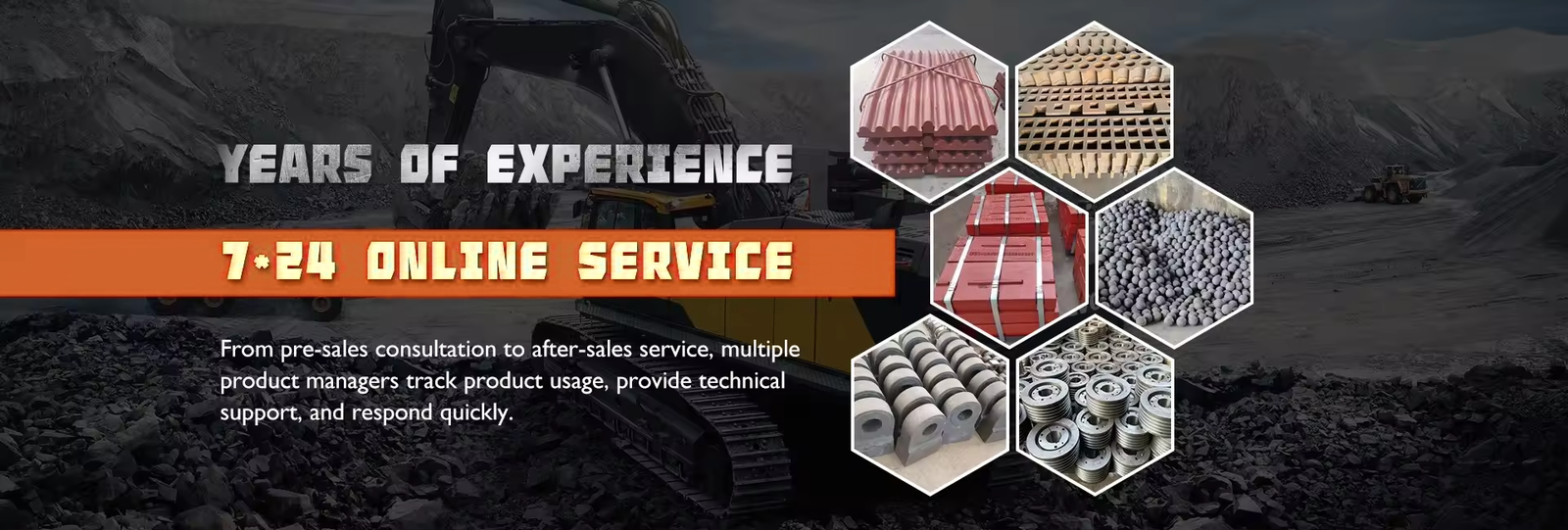
Owns abundant experience skilled technology in producing Ductile iron,high manganese steel, high chromium cast iron, alloy steel, carbon steel, heat-resistant steel and other castings. Products widely used in mining, cement, metallurgical, construction, metal recycling, engineering and other aggregate industries.(Mining wheels, mining axles, mining car connection buffers, crusher accessories, bucket teeth, mining grinding balls, wear-resistant castings, ductile iron castings, bearing boxes, mining crane pulley, mining chain, machining parts, etc.)
A:We provide pre-sale service,in-sale service and after-sales service,and always pursue long-term development and win-win
cooperation with you,adhering to the principle of customer first.