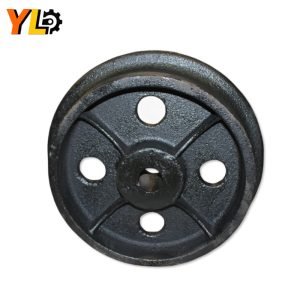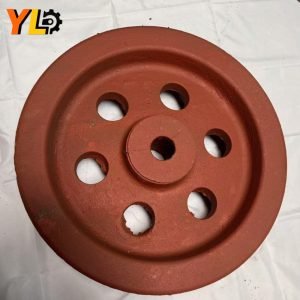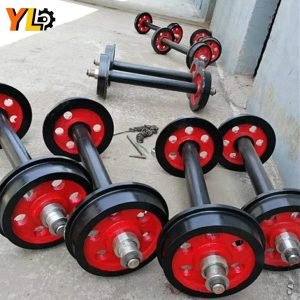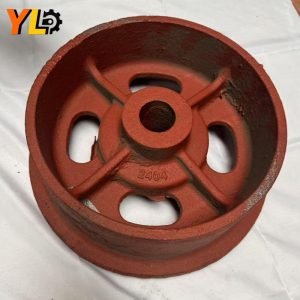
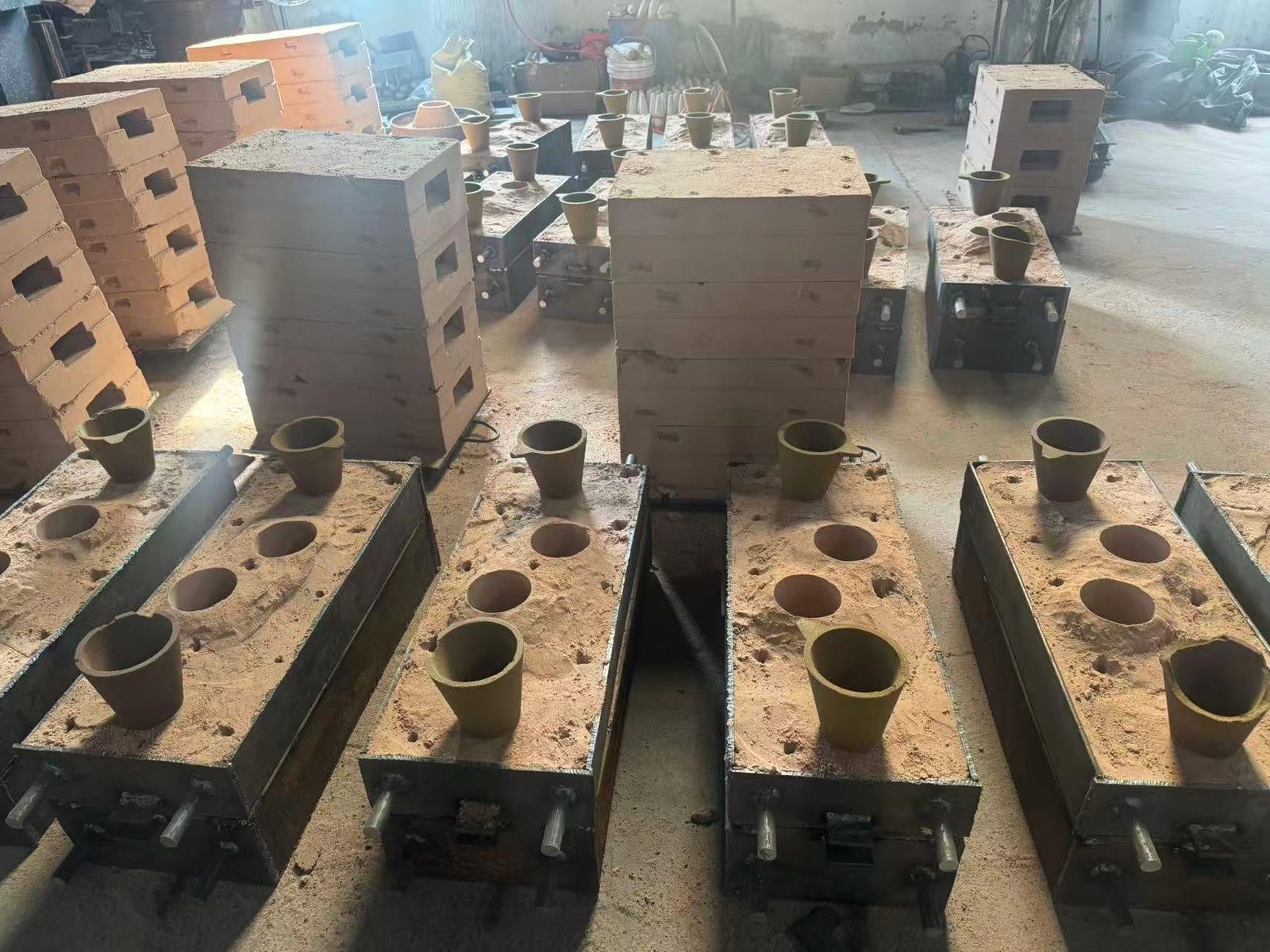
The sodium silicate molding process in casting is a traditional casting technique that uses sodium silicate as a binder to bond quartz sand (or other refractory aggregates) into a mold/core shape. After curing, a mold/core with a certain strength is obtained for pouring molten metal to produce castings. Its core advantages include good mold sand fluidity, high molding efficiency, and relatively low cost, making it widely used in the production of steel castings, iron castings, and some non-ferrous alloy castings.
I. Core Components of the Process
The key to the sodium silicate molding process lies in the matching of three elements: “binder-aggregate-curing agent”, which collectively determine the core properties of the mold, such as strength, air permeability, and collapsibility.
| Component | Core Function | Common Types/Parameters |
|---|---|---|
| Binder (Sodium Silicate) | Bonds refractory aggregate particles together to form mold strength | Mainly composed of sodium silicate (Na₂O·nSiO₂). The modulus n (molar ratio of SiO₂ to Na₂O) is a key indicator:- Modulus 2.2~2.8: Suitable for CO₂ hardening process;- Modulus 2.8~3.2: Suitable for self-hardening processes (e.g., ester hardening). |
| Refractory Aggregate | Forms the mold skeleton to withstand the high-temperature scouring of molten metal | Primarily quartz sand (for iron and steel castings). Olivine sand and chromite sand can also be used (for special materials such as high-alloy steel to reduce sand adhesion). |
| Curing Agent | Converts sodium silicate from a liquid to a solid gel, endowing the mold with strength | Divided into two categories:1. Gaseous curing agent: CO₂ (most commonly used, for rapid hardening);2. Liquid/solid curing agent: Organic acid esters (e.g., ethyl formate, for self-hardening processes), sodium fluorosilicate (traditional self-hardening, rarely used now). |
II. Mainstream Process Flow (Taking the Most Common “CO₂-Hardened Sodium Silicate Molding” as an Example)
1. Mold Sand Preparation
- Ratio Control: Determine the amount of sodium silicate added (usually 3%~6% of the sand weight) based on the casting material and size. No additional additives are required (simplifying the process).
- Sand Mixing Requirements: Mix in a wheel-type or continuous sand mixer to ensure that sodium silicate uniformly coats the sand particles. The mixing time is usually 2~5 minutes (excessively long mixing may cause premature curing of the mold sand).
2. Molding/Core Making
- Fill the mixed mold sand into a flask (or core box), and compact it manually, by jolting, or by sand shooting (high efficiency) to ensure uniform compaction density of the mold sand (insufficient compaction may lead to casting dimension deviation or sand washing).
- For complex cores, a “segmented molding + bonding” method can be adopted to avoid core deformation.
3. CO₂ Curing (Core Step)
- Pass CO₂ gas into the mold through a vent rod inserted into the mold sand or the vent hole of the flask. CO₂ reacts chemically with sodium silicate:
Na₂O·nSiO₂ + CO₂ + mH₂O → Na₂CO₃ + nSiO₂·mH₂O (Silica Gel) - Curing parameters: CO₂ gas pressure of 0.1~0.3MPa, and ventilation time adjusted according to the mold thickness (usually 5~30 seconds; extended time is required for large and thick molds) until both the surface and interior of the mold are hardened (the surface should be non-sticky to the touch and have sufficient strength).
4. Mold Repair and Flask Closing
- After curing, remove the vent rod and manually repair defects on the mold surface (such as burrs and depressions) using a small amount of sodium silicate sand.
- After verifying that the mold cavity dimensions are correct, close the upper and lower flasks and fix them with bolts or clamps to prevent molten metal from leaking during pouring.
5. Pouring
- Control the pouring temperature of the molten metal according to the casting material requirements (e.g., 1500~1650℃ for steel castings, 1350~1450℃ for iron castings), and use an appropriate gating system (e.g., bottom pouring, step pouring) to avoid sand washing caused by the scouring of the mold by the molten metal.
6. Shakeout and Cleaning
- After pouring, cool the casting to room temperature (or an appropriate temperature), and use a vibratory shakeout machine to shock the flask, causing the sodium silicate sand to collapse (sodium silicate sand has poor collapsibility and requires mechanical force or water flushing for assistance).
- Remove residual sand particles from the casting surface to complete the cleaning process (e.g., sandblasting, shot blasting).
III. Other Common Sodium Silicate Molding Processes (Classified by Curing Method)
In addition to CO₂ hardening, the self-hardening sodium silicate molding process is also widely used in mass production or for complex cores. The core differences lie in the “curing method” and “process flow flexibility”.
| Process Type | Curing Method | Advantages | Disadvantages | Application Scenarios |
|---|---|---|---|---|
| CO₂ Hardening Process | Rapid curing by introducing CO₂ gas | 1. Fast curing speed (seconds to tens of seconds);2. Good mold sand fluidity and high molding efficiency;3. No pungent odor, resulting in a better operating environment. | 1. Low mold strength (especially wet strength);2. Inadequate curing in the interior of large and thick molds;3. High sodium silicate dosage and poor collapsibility. | Single-piece and small-batch production, large steel castings (e.g., machine tool beds, valve bodies), emergency orders. |
| Ester-Cured Self-Hardening Process | Adding organic acid ester during sand mixing for room-temperature self-hardening | 1. High mold strength (excellent dry and wet strength);2. No need for CO₂ injection, suitable for complex cores (e.g., cylinder block cores);3. Controllable curing time (from several minutes to several hours). | 1. High cost of ester curing agents;2. Molding must be completed within the “pot life” after sand mixing (otherwise the mold sand becomes invalid). | Medium-batch production, complex castings (e.g., automobile engine cylinder blocks, wind power castings). |
IV. Summary of Process Advantages and Disadvantages
Advantages
- Simple Process: No complex additives are required, the sand mixing and molding processes are short, and it is easy to master.
- Good Environmental Performance: No harmful gases such as benzene or formaldehyde (unlike resin sand), and only a small amount of SiO₂ dust is generated during pouring (which can be controlled by dust removal equipment).
- Strong Adaptability: Applicable to almost all metal materials for castings, including steel, iron, copper alloys, and aluminum alloys, with no strict restrictions on casting size (from several kilograms to tens of tons).
- Low Cost: Sodium silicate and quartz sand are inexpensive, and equipment investment is low (compared with resin sand production lines).
Disadvantages
- Poor Collapsibility: The silica gel formed after sodium silicate curing has high toughness. After the casting cools, the mold is not easy to collapse automatically, requiring strong vibration or water flushing for cleaning, which increases labor intensity.
- Prone to Sand Adhesion Defects: Excessive sodium silicate dosage or excessively high molten metal temperature may cause sand adhesion on the casting surface (sand particles adhere to the casting surface and are difficult to clean).
- Strong Hygroscopicity: Cured sodium silicate sand is prone to absorbing moisture from the air if stored for a long time (especially in humid environments), leading to reduced mold strength and even “moisture return” (softening of the mold sand).
- Relatively High Casting Surface Roughness: Compared with resin sand, sodium silicate sand has a coarser particle size (usually 50~100 mesh), so sand grain marks are easily left on the casting surface, requiring additional grinding.
V. Common Problems and Solutions
| Common Defect | Cause | Solution |
|---|---|---|
| Casting Sand Adhesion | 1. Excessive sodium silicate dosage;2. Low quartz sand purity (high clay content);3. Excessively high molten metal pouring temperature. | 1. Reduce sodium silicate dosage (control at 3%~5%);2. Use high-purity quartz sand (clay content < 0.5%);3. Appropriately lower the pouring temperature (e.g., below 1550℃ for steel castings). |
| Mold Cracking | 1. Too fast curing speed (excessively high CO₂ ventilation pressure);2. Uneven mold sand compaction density;3. Large differences in mold wall thickness. | 1. Reduce CO₂ ventilation pressure (0.1~0.2MPa) and extend ventilation time;2. Optimize the compaction process (e.g., using “jolt + squeeze” composite compaction);3. Add reinforcing ribs or adopt segmented molding for thick-walled parts. |
| Core Deformation | 1. Inadequate core curing (insufficient ester hardening time);2. Insufficient core support structure;3. Uneven sand mixing (local excess of sodium silicate). | 1. Extend ester hardening time or increase the amount of curing agent added;2. Add core supports (e.g., iron wire, steel pipe supports);3. Optimize the sand mixing process to ensure uniform dispersion of sodium silicate. |
VI. Process Development Trends
To overcome the shortcomings of traditional sodium silicate molding, the industry has mainly advanced in the following directions in recent years:
- Application of Low-Modulus Sodium Silicate: Adopt low-modulus sodium silicate (modulus 2.0~2.2) to reduce the dosage of sodium silicate (to 2.5%~4%) and improve collapsibility.
- Development of New Curing Agents: Develop environmentally friendly ester curing agents (e.g., benzene-free esters) to reduce odor and toxicity while improving curing efficiency.
- Combination of Composite Processes: Combine sodium silicate sand with resin sand (e.g., “sodium silicate sand for outer mold + resin sand for core”) to balance cost and casting precision.
- Optimization of Reclaimed Sand Technology: Improve the reclamation rate of used sodium silicate sand through “thermal reclamation” or “chemical reclamation” (the traditional reclamation rate is only 60%~70%, and now it can be increased to over 85%), reducing raw material consumption.
In conclusion, the sodium silicate molding process is a cost-effective and adaptable casting method, especially suitable for the production of large, single-piece, and small-batch castings. However, in the field of high-precision and mass-produced castings, it is necessary to combine process improvements or use it with other molding processes (e.g., resin sand) to meet quality requirements.