Ductile iron, with its high strength, high toughness, excellent wear resistance, and cost advantages, is widely used in mining machinery castings. The mining environment is characterized by high impact, strong wear, heavy dust, and large load fluctuations, which place strict requirements on the mechanical properties, fatigue resistance, and service life of castings. Through means such as composition optimization and heat treatment strengthening, ductile iron can precisely meet the needs of these scenarios. The following is an analysis from the perspectives of core application components, performance adaptation logic, technical optimization, and practical cases:
I. Typical Application Scenarios of Core Mining Castings
In mining machinery, ductile iron is mainly used in key components that directly contact ores, bear impact wear, or heavy loads. Typical applications include:
1. Core components of crushing equipment
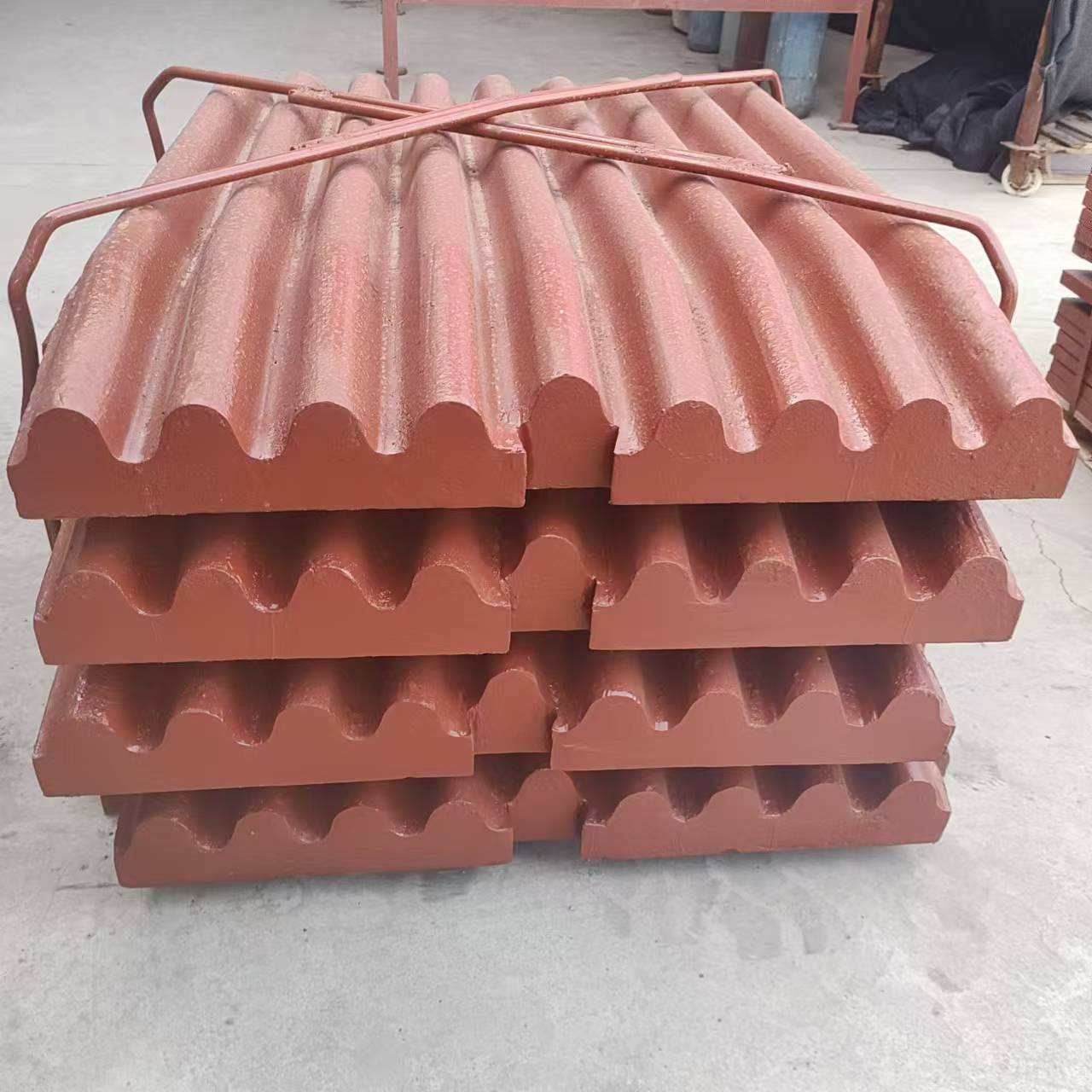
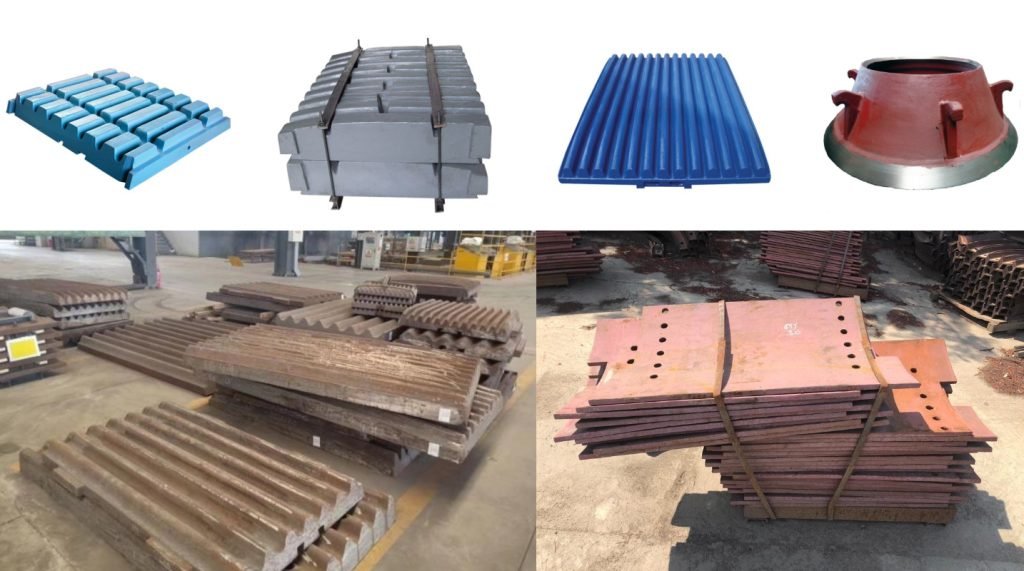
- Jaw plates/ tooth plates (core components of jaw crushers): They directly collide and extrude with ores, requiring both impact resistance (to avoid fracture) and wear resistance (to extend service life). Traditional gray cast iron is prone to brittle fracture, while cast steel is costly and heavy. Ductile iron (such as QT600-3, QT700-2), with a structure of pearlitic matrix + nodular graphite, has a tensile strength of 600-800 MPa and an impact toughness of ≥15 J/cm². It can withstand the severe impact of ores and reduce wear due to the “micro-lubrication” effect of graphite nodules, with a service life 30%-50% longer than that of gray cast iron.
- Cone crusher liners: They bear high-stress rolling. Alloyed ductile iron (added with Cr, Mo, Cu) is used to form dispersed carbides, with a hardness of HRC 40-45. Its wear resistance is close to that of high-chromium cast iron, and it has better toughness (to avoid liner chipping), making it suitable for processing hard rocks such as granite and basalt.
2. Components of conveying and lifting equipment
- Scraper conveyor scrapers: They are responsible for conveying bulk materials in coal mines and iron mines, requiring resistance to chain friction and ore impact. Ductile iron scrapers (QT500-7) have an elongation of ≥7%, which can withstand periodic load impacts during conveying without breaking. At the same time, graphite nodules can reduce the friction coefficient, reducing wear with the chute, and the maintenance cycle is 2-3 times longer than that of ordinary carbon steel scrapers.
- Hoist drums: They bear the total weight of steel wires and ores, requiring high strength and fatigue resistance. The drum hub made of austempered ductile iron (ADI) has a tensile strength of 1000 MPa and a yield strength of ≥800 MPa. Its fatigue life is 40% longer than that of cast steel parts, and its weight is reduced by 15%, lowering the energy consumption of equipment operation.
3. Components of screening and mineral processing equipment
- Vibrating screen plates: They rub against ores under high-frequency vibration, requiring wear resistance and fatigue resistance. Ductile iron screen plates undergo surface quenching (surface hardness HRC 50-55) and have core toughness (impact value ≥20 J/cm²). They can resist high-frequency scouring wear of ores and avoid cracking caused by long-term vibration, with a service life 1.5-2 times that of ordinary steel plate screen plates.
- Mineral processing machine bearing blocks: They support rotating components and bear radial heavy loads and impact loads. Ductile iron (QT450-10) has a compressive strength of ≥450 MPa and good shock absorption (graphite nodules absorb vibration energy), reducing early failure of bearings due to vibration and lowering maintenance costs by more than 25%.
II. Core Performance Logic of Ductile Iron Adapting to Mining Environments
The core challenges of mining working conditions are the combined effects of “impact + wear + heavy load”. The performance advantages of ductile iron specifically address these issues:
- Impact resistance and fracture resistance: Nodular graphite avoids the “splitting effect” of flake graphite in gray cast iron, making the material matrix more continuous. Its impact toughness is 3-5 times that of gray cast iron (e.g., QT450-10 has an impact value of ≥10 J/cm², while gray cast iron is only 2-3 J/cm²), which can withstand sudden impacts from ores without brittle fracture.
- Wear resistance regulation: By adjusting the matrix structure (the higher the pearlite content, the better the wear resistance) or adding alloying elements (Cr and Mo form hard phases), the wear rate can be controlled at 0.1-0.3 g/h (under dry friction conditions), close to that of quenched medium carbon steel, and the cost is only 60%-70% of that of high-chromium cast iron.
- Heavy load and fatigue resistance: Tensile strength ranges from 450-1000 MPa (covering the needs of most mining components), and yield strength is ≥300 MPa, which can withstand long-term static heavy loads (such as drums and bearing blocks) and dynamic alternating loads (such as scrapers and screen plates). The fatigue limit reaches 250-400 MPa, far exceeding that of gray cast iron (100-150 MPa).
- Process adaptability: It can be cast into complex shapes (such as ribbed liners and special-shaped scrapers) without complex machining, suitable for the non-standard structural needs of mining components, and the production efficiency is 20%-30% higher than that of cast steel parts.
III. Performance Optimization Technologies: Customized Solutions from Materials to Processes
To further adapt to extreme mining conditions, ductile iron needs to be strengthened through the following technologies:
- Alloying modification: Adding 0.3%-0.8% Cr and 0.2%-0.5% Mo to form alloy carbides, improving matrix hardness; adding 1.0%-2.0% Cu to promote pearlite formation, increasing wear resistance by 40% while maintaining toughness (e.g., QT600-3CrMo with a hardness of HB 230-280).
- Austempering (ADI) treatment: Heating ductile iron to 850-900°C for austenitization, then isothermal quenching in a 250-350°C salt bath to obtain a bainite + retained austenite structure. It has a tensile strength of 800-1200 MPa, an impact toughness of ≥30 J/cm², and a fatigue life 2-3 times that of ordinary ductile iron, suitable for high-impact components (such as jaw plates and scrapers).
- Surface hardening treatment: Surface quenching (induction heating to 900-950°C, water spray cooling) is applied to easily worn components such as liners and screen plates, with a surface hardness of HRC 50-55 and a hardened layer depth of 3-5 mm. Wear resistance is increased by more than 50%, while the core remains tough to avoid overall embrittlement.
IV. Practical Application Cases and Benefits
- Reformation of a jaw crusher in an iron mine: Replacing the original gray cast iron jaw plates with QT700-2 alloy ductile iron jaw plates, through adding 0.5% Cr and isothermal quenching treatment, the service life of a single jaw plate was extended from 30 days to 50 days, the annual replacement frequency was reduced by 4 times, 120 hours of downtime were saved, and the comprehensive benefit was increased by approximately 600,000 yuan/year.
- Upgrading of coal mine scraper conveyors: Using ADI ductile iron scrapers (tensile strength 1000 MPa) instead of traditional 45# steel scrapers, the weight was reduced by 18%, the energy consumption of the conveyor motor was reduced by 10%, and the scraper fracture rate was reduced from 5% to 0.3%, reducing annual maintenance costs by 350,000 yuan.
- Vibrating screen plates in gold mines: Using surface-quenched ductile iron screen plates (surface HRC 50), compared with ordinary Mn13 steel plate screen plates, the wear rate was reduced by 60%, the replacement cycle was extended from 1 month to 3 months, reducing the loss caused by gold mine shutdown for mineral processing (based on a daily output of 1000 tons of gold ore, the monthly loss was reduced by approximately 2 million yuan).
V. Summary: Core Value of Ductile Iron in Mining Castings
Ductile iron, with its balance of “strength-toughness-wear resistance” and advantages of low cost and easy forming, has become an ideal material for mining machinery castings. Its application not only solves the pain points of traditional materials (brittle fracture of gray cast iron, high cost of cast steel, insufficient toughness of high-chromium cast iron) but also achieves the goals of “long service life, low maintenance, and high output” for mining equipment through customized composition and process optimization. With the development of mining intellectualization and large-scale (such as large crushers and heavy scraper machines), high-strength and lightweight ductile iron (such as ADI and alloy ductile iron) will play a core role in more severe working conditions.