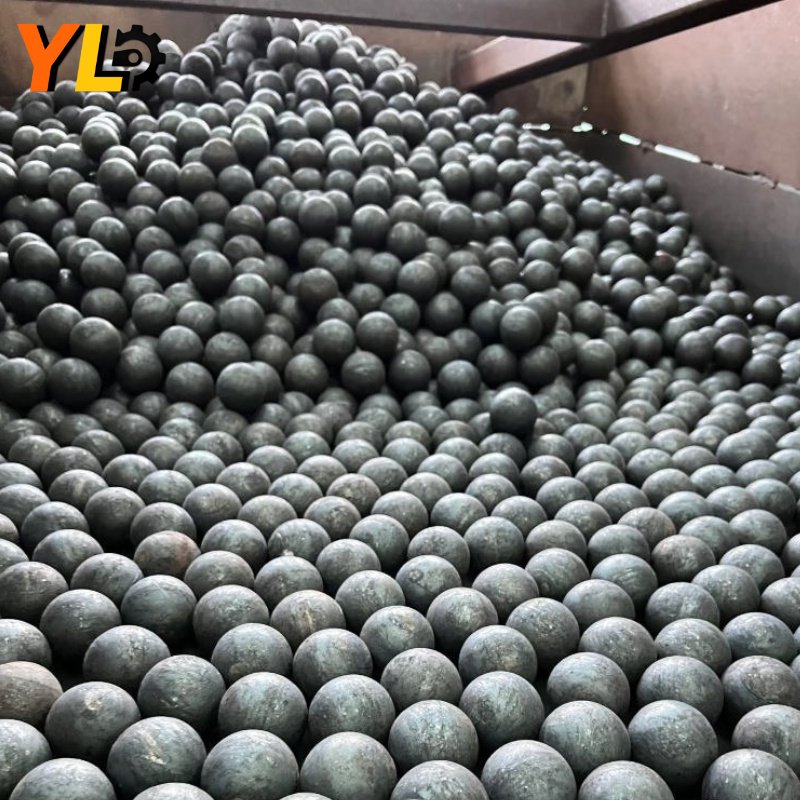
High chromium grinding balls are widely and crucially used in the mining industry due to their characteristics such as high hardness, high wear resistance, good toughness, and impact resistance. They are one of the core media in the ore grinding process.
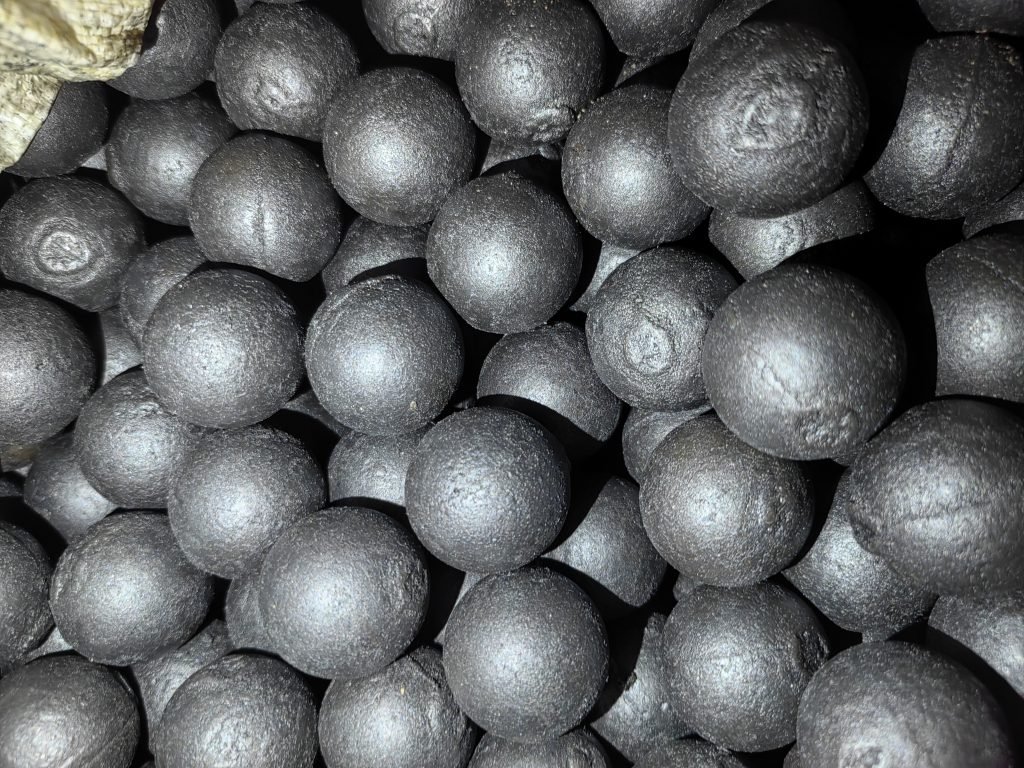
I. Core Application Scenarios
In mining operations, after crushing, ores need to be further ground into fine powders for subsequent mineral processing (such as flotation, magnetic separation, etc.) to extract target metals (such as iron, copper, lead, zinc, gold, silver, etc.). High chromium grinding balls are mainly used in ball mills, a core piece of equipment. Through impact and grinding with ores, they crush coarse-grained ores to the fineness required for mineral processing (usually tens to hundreds of microns).
Specific applications include:
- Metal ores: Grinding operations for iron ore, copper ore, gold ore, molybdenum ore, etc.
- Non-metallic ores: Fine grinding of phosphate rock, fluorite ore, graphite ore, etc.
II. Outstanding Advantages in Mining Applications
- High wear resistance, reducing loss costs
High chromium grinding balls typically have a chromium content of over 10%-15% and a hardness of 58-65HRC, with much better wear resistance than low-chromium balls, medium-chromium balls, or ordinary forged steel balls. In the high-hardness, high-impact grinding environment of mines, their own wear rate is low, and their service life is longer, which can reduce the frequency and cost of replacing grinding media. - Good toughness, reducing breakage rate
Large ball mills in mines have a large loading capacity (some large ball mills can hold tens of tons of balls). During the grinding process, the impact between grinding balls and between balls and ores is intense. High chromium grinding balls, through reasonable alloy composition design (such as adding nickel, molybdenum, etc.), have both hardness and toughness, with excellent impact resistance. Their breakage rate is much lower than that of ordinary steel balls, avoiding equipment jamming or material contamination caused by ball breakage. - Improving grinding efficiency and reducing energy consumption
High chromium grinding balls have a high density (about 7.8-7.9g/cm³). When rolling in the ball mill, they can exert greater impact and grinding force on ores, crushing them to the target fineness faster, shortening the grinding time, and increasing the processing capacity of the ball mill. At the same time, due to their low wear, the ball diameter changes slowly, which can maintain stable grinding efficiency and reduce energy consumption caused by unreasonable ball diameters. - Adapting to complex ore characteristics
Ore compositions in mines are complex, and some ores contain hard impurities (such as quartz) or corrosive components (such as sulfides). High chromium grinding balls have better corrosion resistance than ordinary steel balls and high hardness, so they can adapt to the grinding of high-hardness, high-wear ores, avoiding material contamination (such as excessive iron ions affecting mineral processing indicators) caused by medium corrosion or excessive wear.
III. Usage Precautions
- Reasonable selection of ball diameter ratio
The grinding effect of mine ball mills is closely related to the matching of grinding ball diameters. It is necessary to select high chromium balls of different diameters for grading (such as mixing large, medium, and small balls in a certain proportion) according to ore particle size, hardness, and ball mill specifications to ensure that coarse-grained ores are effectively crushed and fine particles are fully ground, improving grinding uniformity. - Controlling loading capacity and rotation speed
Excessively high loading capacity will lead to increased friction between grinding balls and between balls and liners, resulting in higher energy consumption; excessively low loading capacity will result in insufficient grinding efficiency. It is necessary to adjust the loading capacity of high chromium grinding balls according to the ball mill model (usually 40%-50% of the effective volume of the ball mill) and match the appropriate rotation speed to avoid ball breakage or equipment overload due to excessive impact. - Regularly inspecting wear and adding supplements
Although high chromium balls have good wear resistance, they will still wear after long-term use. It is necessary to regularly shut down the machine to check the changes in ball diameter and wear amount, and timely add new balls to maintain a reasonable ball diameter ratio and loading capacity, avoiding a decrease in grinding efficiency due to insufficient ball quantity or too small ball diameter. - Avoiding excessive contact with corrosive environments
Although high chromium balls have good corrosion resistance, when processing highly corrosive ores such as high-sulfur and high-acid ores, it is necessary to strengthen the anti-corrosion measures of the ball mill (such as using corrosion-resistant materials for liners) and shorten the inspection cycle to prevent the performance degradation of grinding balls due to corrosion.
High chromium grinding balls, with the characteristics of “high wear resistance, high toughness, and high efficiency”, have become the core media in the ore grinding process of mines, especially suitable for the fine grinding of high-hardness, high-value-added ores. Reasonable use combined with scientific management (such as ball diameter ratio, loading capacity control) can significantly improve the grinding efficiency of mines, reduce operating costs, and ensure the stability of mineral processing indicators.